






Text: Monika Kelle,Wolf Group brand manager
Make your wall, window, door or sanitary joints last for a decade by choosing the right sealant for these applications.
The traditional approach: Acrylic sealants
Acrylic sealants are odourless, paintable, affordable and environmentally friendly – all of Wolf Group’s acrylic sealants have the EC1+ emission label. Acrylics are easy and convenient to use and clean. They can withstand plastic movement from ±7.5% to ±12.5%, making them suitable for sealing joints with moderate tensile strength. Acrylics are usually plastic: an acrylic joint cannot be restored to its original shape after deformation. This product type is not meant for glazing work.
Once cured, the joint can easily be painted with acrylic and alkyd paints. While curing, the product always shrinks slightly due to releasing of water. For that reason, allow the product to cure completely before painting it – otherwise, the paint may crack. The final curing of acrylic depends on the dimensions of the joint, the ambient temperature and the humidity level. If possible, painting should be done the following day, or at least 4-6 hours after the acrylic has been applied. Much depends on the quality of the paint; if painting needs to be carried out quickly, more elastic paints should be favoured.
The innovative approach: Siliconised acrylics
In applications where joint deformation is bigger than acrylic sealant can withstand, siliconised acrylic is the solution: it provides elastic joint movement capacity of up to ±12.5%. Elastic recovery refers to the sealant’s ability to return to its original shape after movement or deformation. Moreover, siliconised acrylics offer a wider range of colours and can be painted.
Window frames are an application area in which a standard acrylic may not be able to provide a crack-resistant result. The same applies to all outdoor applications, such as external doors and window perimeters. If in doubt, it is always best to choose a product with greater movement capability.
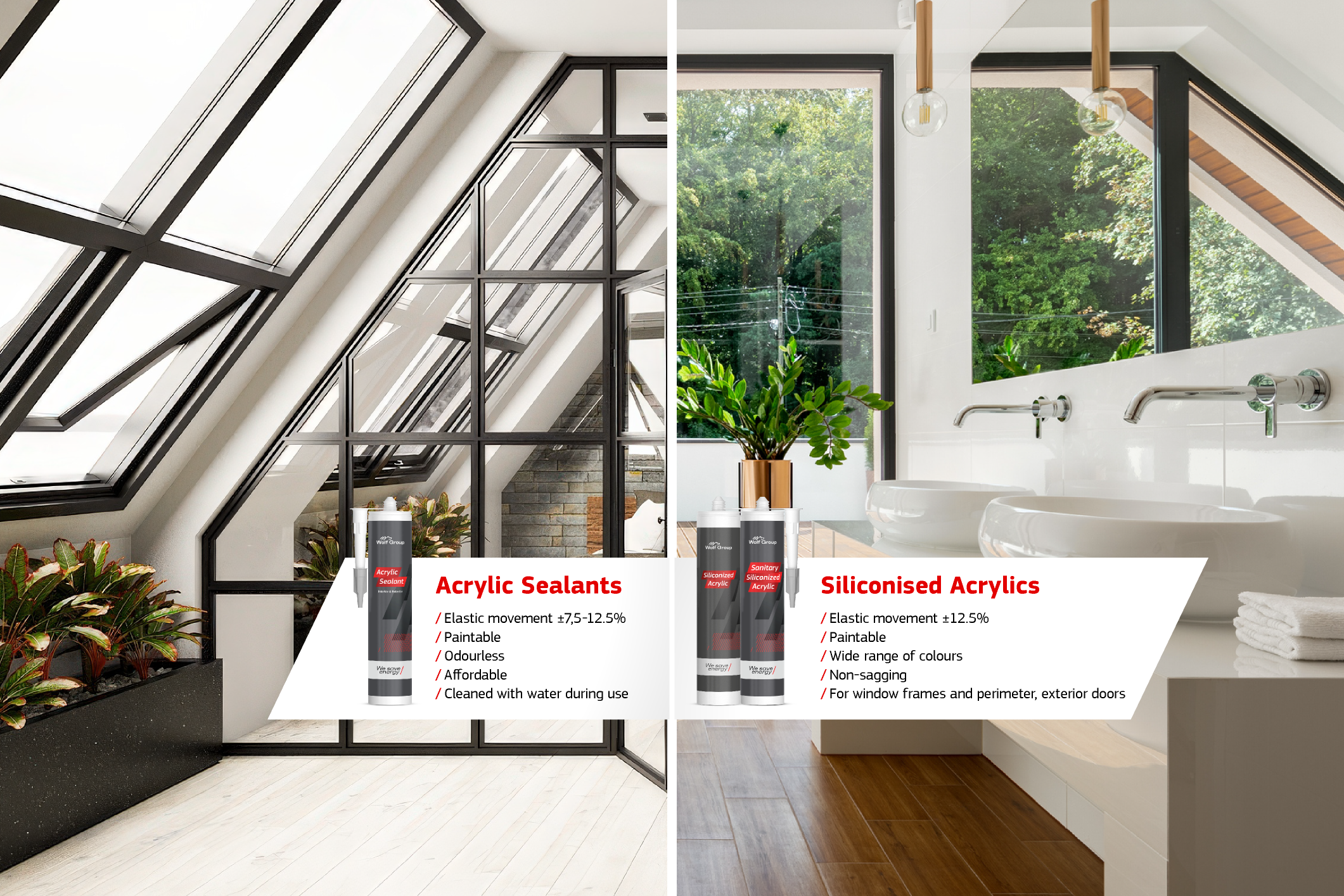
Comparison of acrylic and siliconised acrylic
Upgraded with fungicide
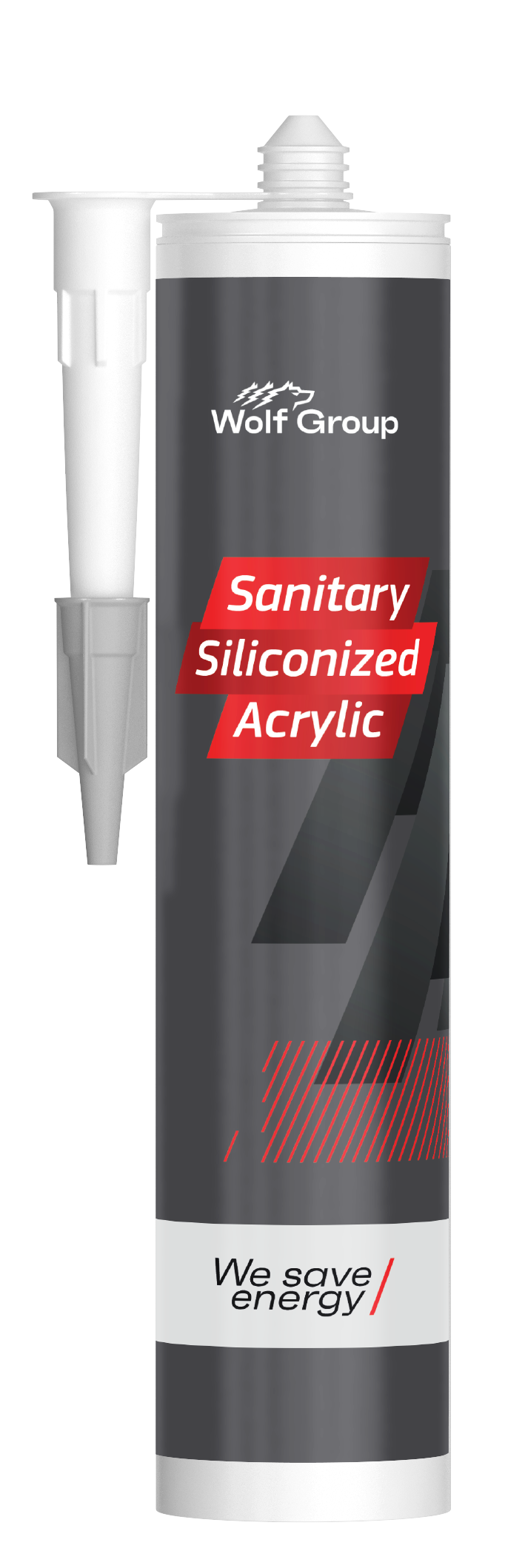
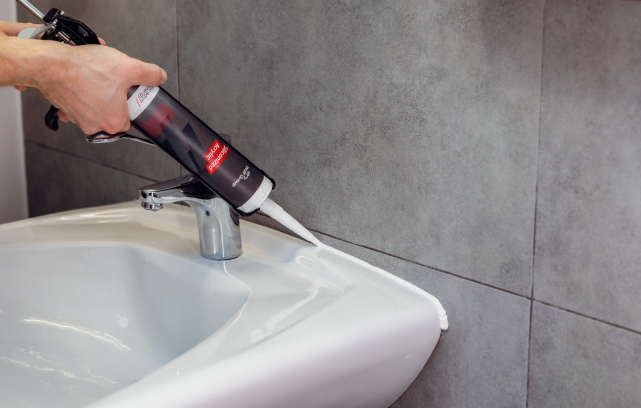
Wolf Group offers siliconised acrylics for both decoration and sanitary applications. Sanitary siliconised plasto-elastic acrylic contains fungicide and is therefore mould- and ageing-resistant.
Its application areas are often the same as acetoxy sanitary silicone, with the exception of wet areas, but it can be used on a wider range of surfaces. However, attention should be turned to paintability: products containing fungicide may not be compatible with all paints, and are more suitable for joints where repainting is not necessary.
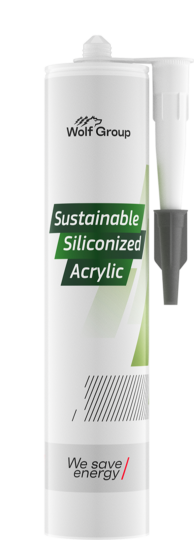
Among other things, Wolf Group offers a sustainable siliconised acrylic made from bio-based ingredients, 100% green electricity and reduced CO2. More than 70% of the plastic content in its packaging is recycled.
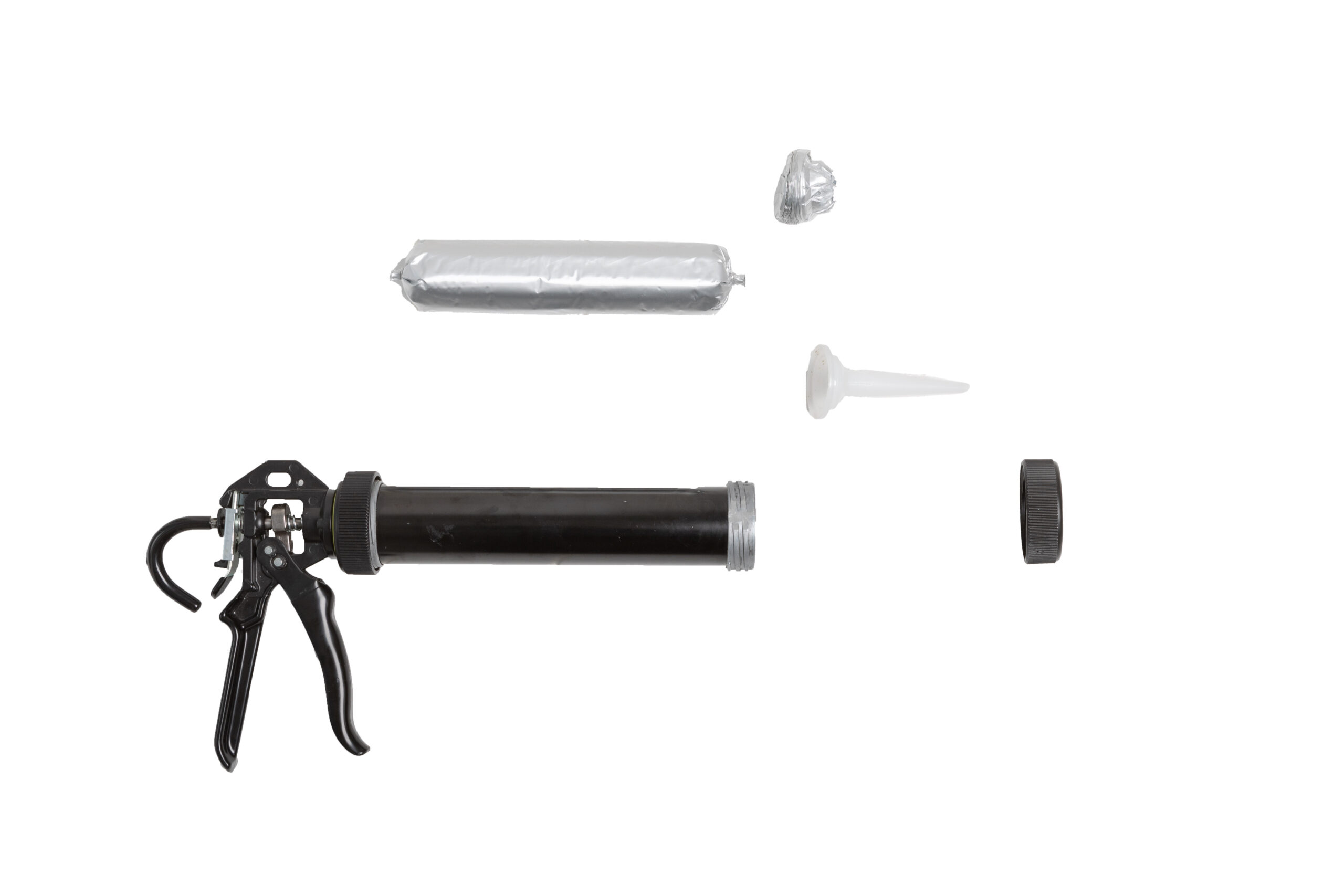
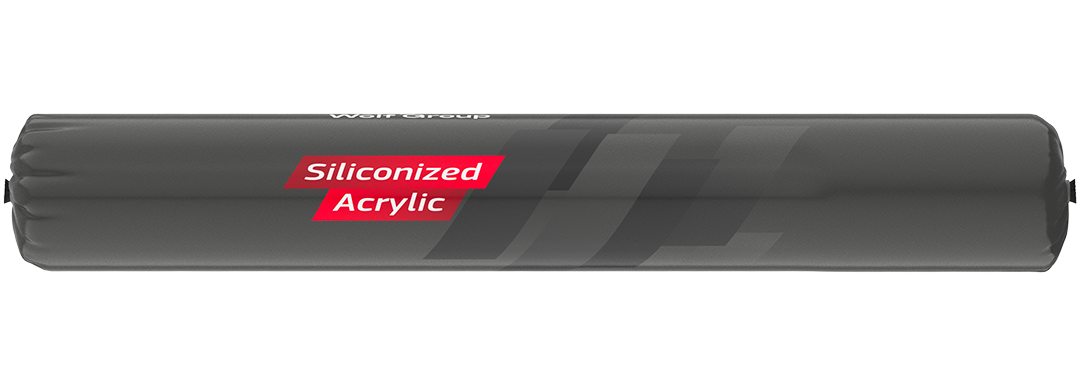
In addition to cartridges, Wolf Group can package all acrylics in 400 ml and 600 ml foil packages.
THE RIGHT CHOICE
| Acrylic sealants |
| Plastic movement ±7.5% to ±12.5% |
| Odourless |
| Paintable |
| Affordable |
| Can be cleaned with water during use |
| Siliconised acrylics |
| Elastic movement ±12.5% |
| Wide range of colours |
| Paintable |
| Non-sagging |
| For external doors and window frames and perimeters |