





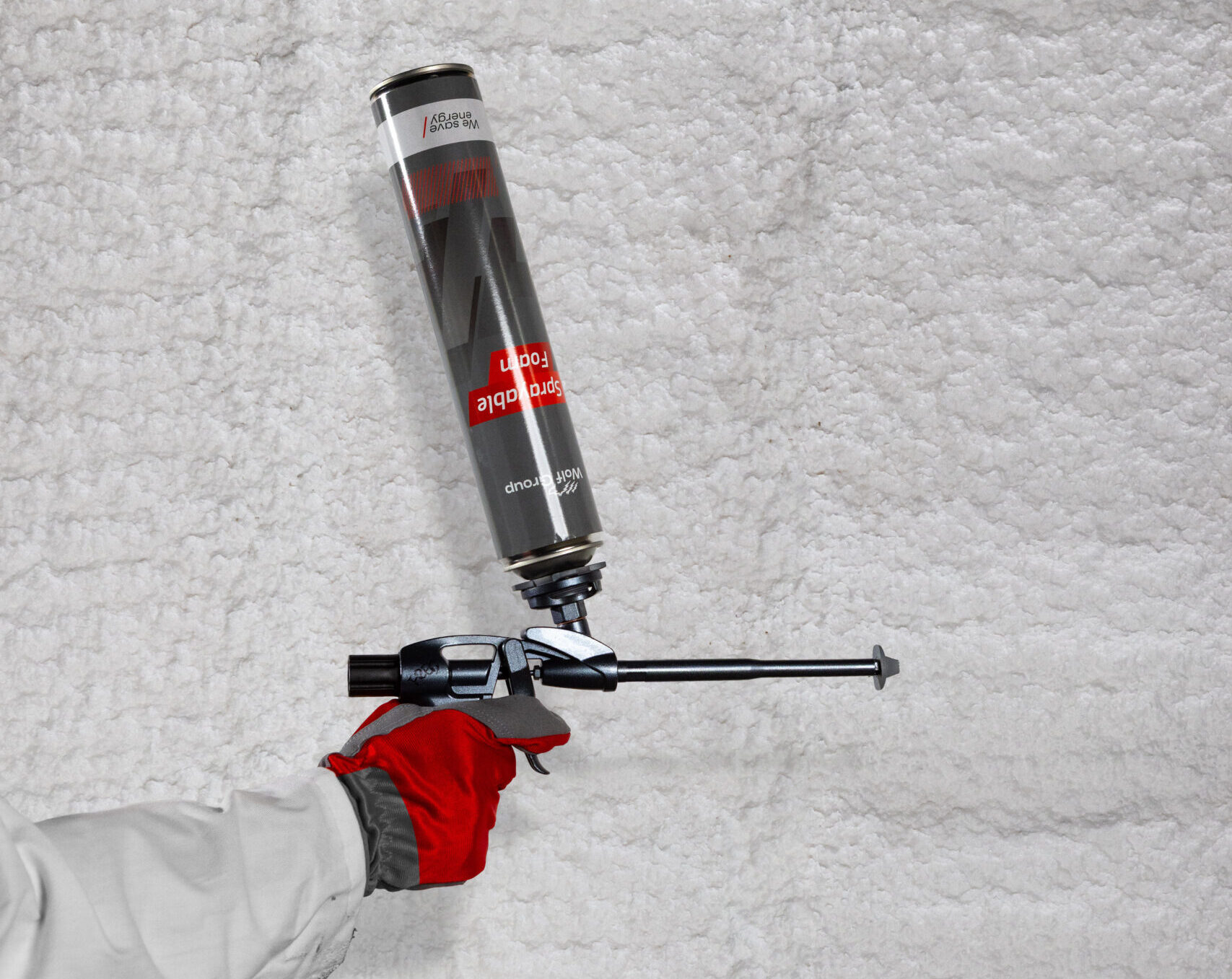
No building consists only of straight, easily accessible lines and surfaces. Therefore, maintaining energy efficiency in such projects requires more advanced solutions- like ready-to-use sprayable insulation foam.
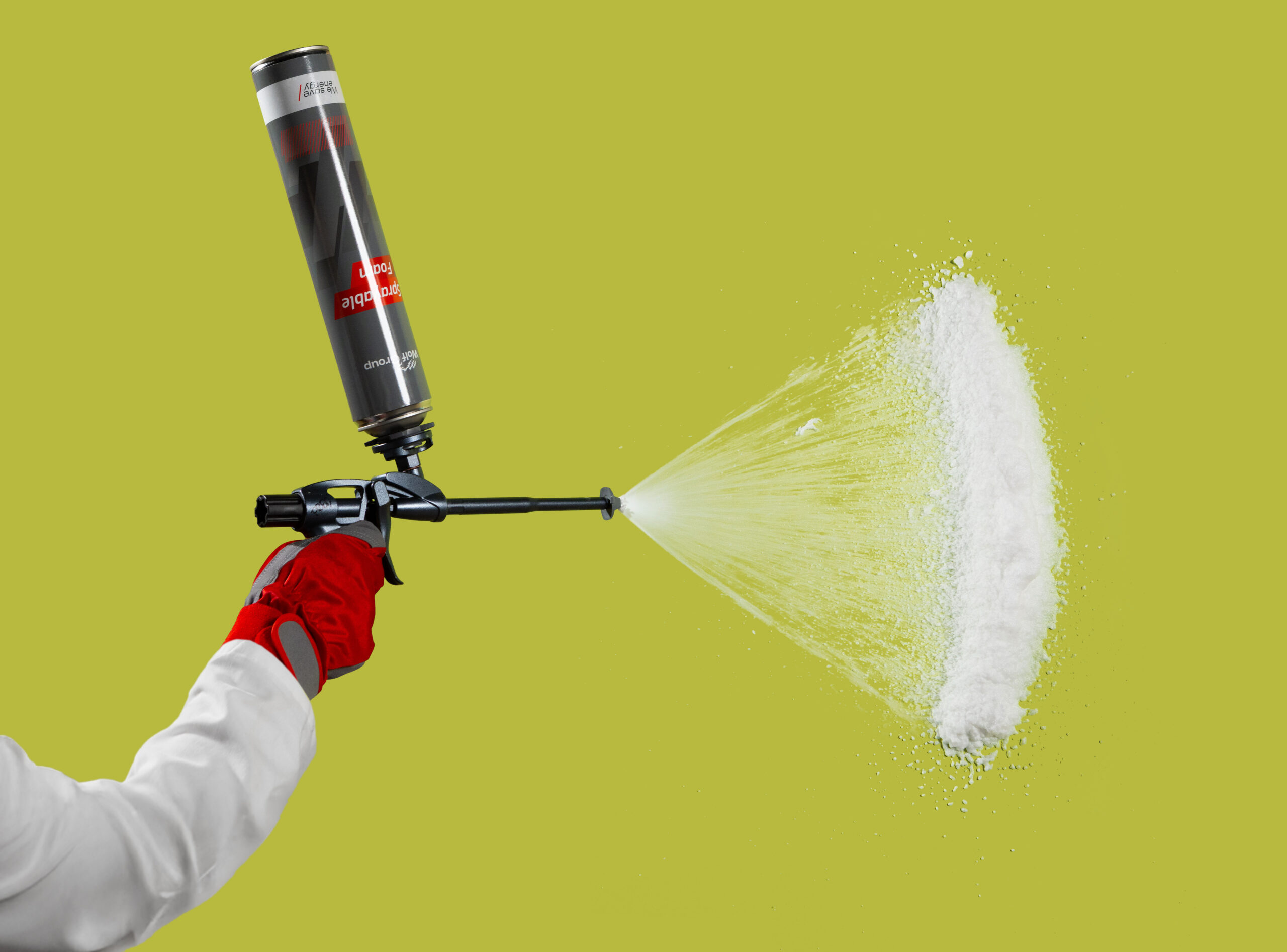
There are several places in buildings where the use of conventional insulation materials is not possible: frame corners, narrow and uneven surfaces and areas behind pipes and wires. An one-component sprayable insulation foam with a special formula and spray nozzle is of great help here, often being the only solution. The spray nozzle can be used in a vertical or horizontal position. The further away you spray, the larger the area that can be insulated. However, the optimum distance is 40 cm from the surface. The foam expands 100%. The next layer can be applied in 60 minutes. The number of layers is unlimited. Moisten slightly between each layer, but make sure there are no water drops on the surface before applying foam. The air temperature during use should be +10 °C to +30 °C.
The consumption depends on the required thickness of the insulation. The output per 1 can (1000 ml) is 1 m² when spraying the foam in a layer of 1.5 cm expanding into a layer of 3 cm. The product is convenient solution for fragment insulation, not for large areas.
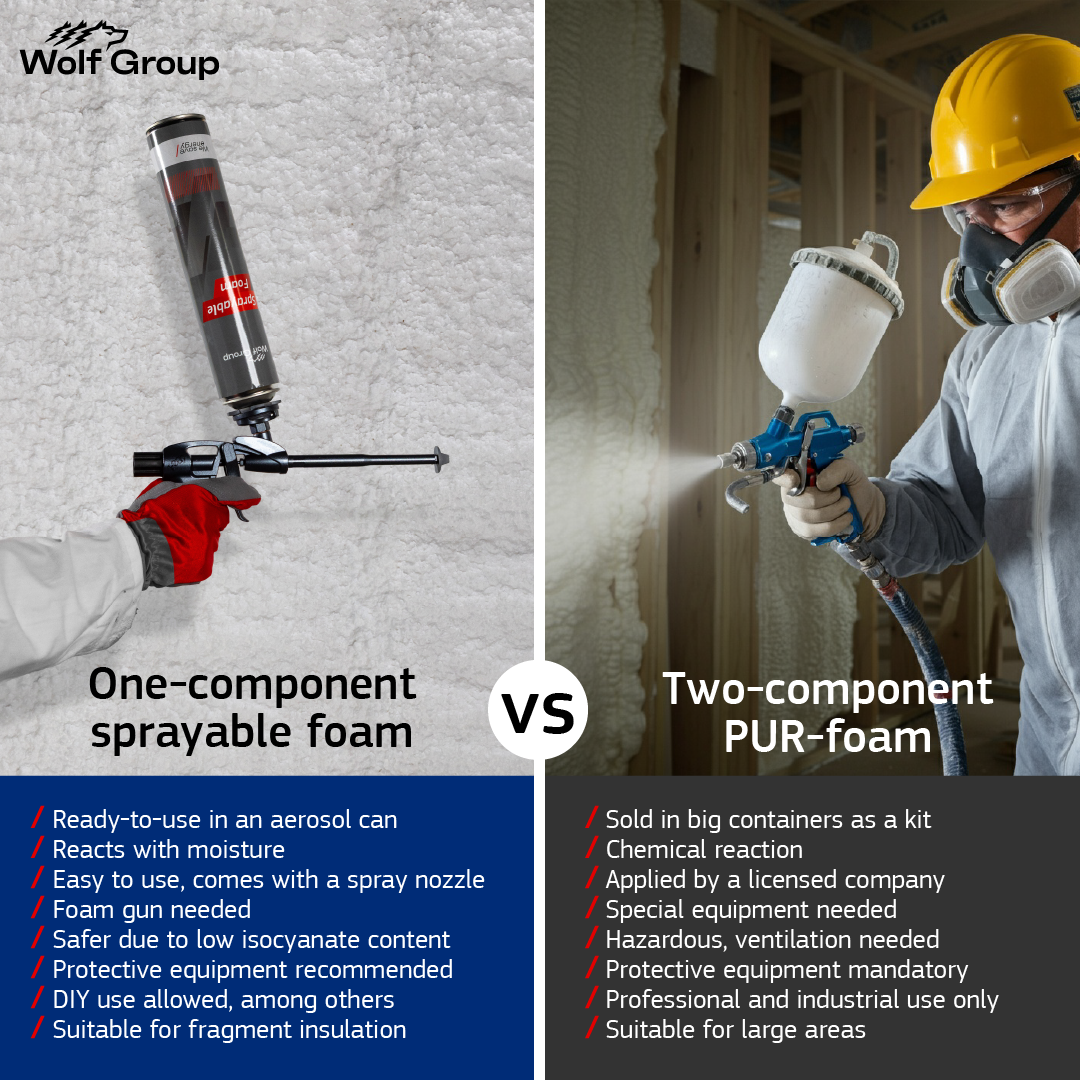
PU foam: 1K vs 2K
Main applications
Surface repair work of façade and wall insulation at external boundaries of the building. Sprayable insulation is ideal for use in all possible corners, protrusions and recesses, curvatures and gaps in an indefinite shape or for filling holes for which it is not easy to find suitable material or a convenient installation method. An airtight foam layer applied to the external boundary of the building provides efficient protection against cold and wind. Although the formula provides the product with a high UV resistance, the installed foam must still be covered to protect it from weather impact.
Condensate on cold surfaces. The generation of condensate on cold surfaces – on the outer surface of tanks, pipes or vessels, is the common problem. Cold water pipes “drip” or are covered with water droplets. The solution to avoid condensation of humidity on cold surfaces is sprayable insulation foam.
Insulation of water and ventilation pipes. In buildings where pipes run in unheated cellars or rooms, condensation and heat loss is a problem. To ensure the good condition of pipes, they must be properly insulated. As the pipes are round in shape and their diameter varies to a great extent, installation of wool is common, but this process can be extremely tedious. Sprayable foam is a particularly ideal solution to cover irregularly shaped and uneven surfaces.
Insulation of small buildings. For a hobby builder, insulation of insufficiently insulated rooms, including sheds, garages, attics, cellars and balconies, with sprayable foam is much more convenient than using insulation boards and rock wool. There is no need to worry about transport and fastenings, as insulation can be applied to the surface directly in the workplace in the desired size and thickness
Listen to what foam spraying sounds like
See how it works